
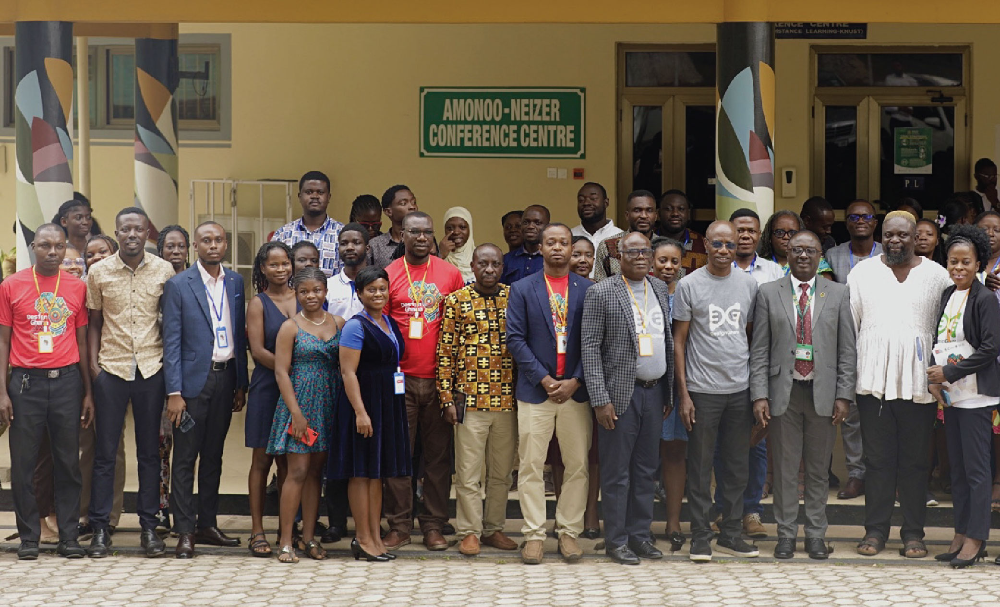
The Kwame Nkrumah University of Science and Technology (KNUST), in collaboration with the Pan Afrikan Design Institute (PADI), has hosted the Design Ghana Conference 2025, on emerging trends in design education and practice across the African continent.
The two-day conference held under the theme: Designing in Afrika: Bridging Cultures, Inspiring Innovation, brought together designers, educators, researchers, and industry professionals to explore the transformative role of design in shaping Africa’s development.

The Pro Vice-Chancellor of KNUST, Professor David Asamoah, stressed the role of design as a powerful agent of change in Africa’s development journey.
“Design is one of the tools Africa can use to adjust its ways. Design thinking leads to the conceptualisation of ideas and ideas lead to innovation and innovation creates business opportunities,” he said.
Professor Asamoah highlighted the need to reshape design pedagogy to reflect African realities, values, and cultural concepts.
“Everything around us is designed, our workspaces, the way we travel, even how we preserve items. Design decisions impact every part of our lives and therefore our educational institutions must train a new generation of critical design thinkers rooted in the African context,” he added.
Mrs. Gugu Motlanthe, Patron of the PADI, emphasised the power of design to create a sense of identity and empowerment.
“Design is the architect of the future and the story we tell ourselves and the world, about who we are, where we come from, and where we’re going,” she stated.
She called for a reimagined approach to design, one that is accessible, inclusive, and driven by the voices of women, youth, and grassroots communities.

Delivering the keynote address, Professor Ezio Manzini of Politecnico di Milano and President of the DESIS Network, urged African nations to embrace design thinking and social innovation as key drivers of sustainable development.
“There is a new narrative that Africa must write, one that moves away from outdated perspectives. Design can be a powerful tool to regenerate this narrative,” he said.
Prof. Manzini highlighted Africa's cultural diversity as a unique asset to digital technology and modern values.
“Design for social innovation allows us to connect our traditions with new technologies, shaping sustainable solutions tailored to our context,” he added.

Prof. Des Laubscher, Co-founder of Greenside Design Centre, emphasised the role of design in advancing the Sustainable Development Goals (SDGs).
“By 2023, we must ensure that learners acquire the knowledge and skills needed to promote sustainable lifestyles. Designers have a critical role to play in achieving this,” he noted.
The conference featured sessions on design pedagogy, curriculum development, fashion and textile innovation, cultural heritage preservation, sustainable built environment solutions, and design for social impact, highlighting the transformative role of design in Africa’s development.


